
📍 1 Triton Square, London NW1 3BF
AI is changing biotech forever. Frontier Biotech 2.0: Five Tables will map AI in drug discovery and development across five stages; targets, molecules, labs, trials, patients. Each table is chaired by a practitioner who has deep knowledge and expertise in this area.
The format is designed for genuine exchange of insights, connections and bold ideas. We will close the night with a synthesis panel with all roundtable chairs to share learnings from their table. Six showcase startups across the stack run demos throughout, alongside an opening workshop and themed networking.
Join us to share and hear what the next 10 years in biotech might look like.
Powered by Advanced Research + Invention Agency

In partnership with London Longevity Network
London Longevity Network is an innovation platform that connects builders, scientists, investors, and innovators, all united by a shared commitment to advancing human healthy lifespan. Breakthroughs in longevity biotech are happening across labs, clinics, and startups, but progress is often siloed. We exist to change that.
Our big-picture goal is to create a global hub for longevity innovation, where bold ideas, world-class talent, and forward-thinking capital come together to make longer and healthier lives possible for everyone.
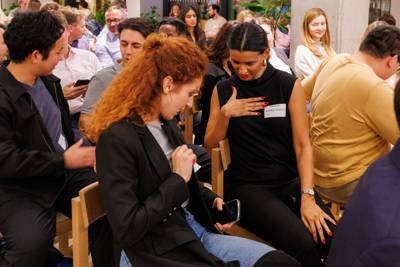
Our Thursday Gatherings are for you to make serendipitous connections and make things happen!
There will be meaningful networking opportunities throughout the night, accompanied by a selection of refreshments and activities:
Fun Zone
Get to know your fellow change-makers in a fun, interactive, and exciting way!
Take a quick break from changing the world and recharge by pinning your hometown on our giant map.
Conversation Corner
Looking to connect beyond the name tags?
Drop into our relaxed Conversation Corner, a cosy space where founders, ecosystem builders, and global thinkers come together to share stories, swap lessons, and innovate. Grab a drink, pull up a chair, and jump into the discussion.

We're excited to welcome a brilliant lineup of biotech startups:
- Photon Fusion - builds decision intelligence frameworks for biotech, for the times when science, IP, and the market are all moving at different speeds.
- Kiin Bio - redefining how drug discovery should work and how information flows.
- Pearbio - delivering functional precision medicine tests and therapeutics to patients what hard-to-treat cancers.
- Syndex Bio - mcPCR is our novel and proprietary platform technology that preserves DNA methylation during DNA amplification.
- Portal Biosystems
- Engivent - building infrastructure for an autonomous biology lab.
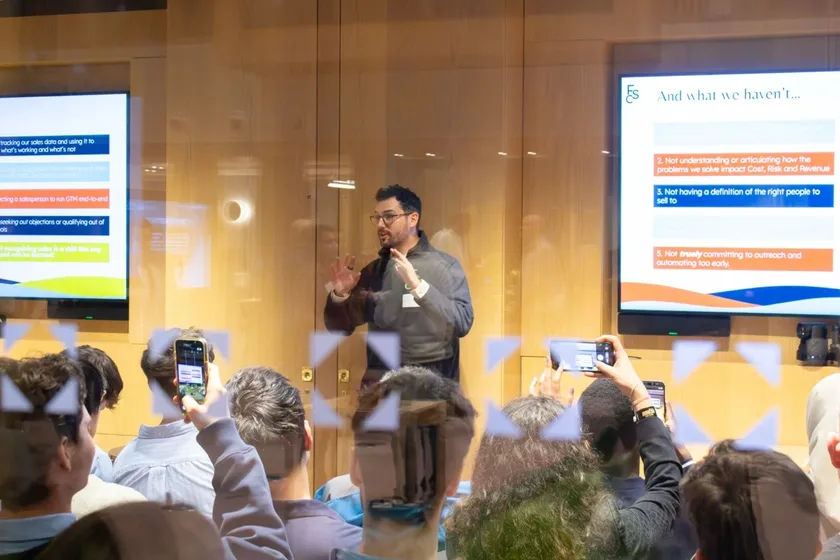
- Health Return on Time Investment (HROTI):How to audit your daily schedule to prioritize the highest-yielding biological habits.
- Health Return on Financial Investment (HROFI): How to allocate your specific budget—whether large or small—to the interventions that offer the greatest cellular "dividends."
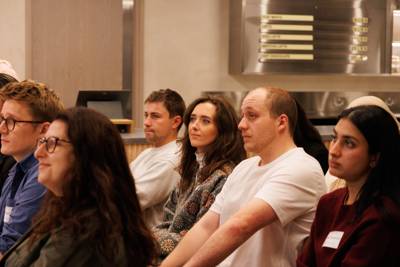
Introduction from Venture Café London.

We will break the event up into five concurrent roundtables, each chaired by a domain practitioner with one driving question. The five chairs will close the night on the main stage with a synthesis of what their tables figured out.
ROUNDTABLE 1: Irrelevant, Biased or False? When Beautiful AI Meets Ugly Biological Data
What will this discussion cover?
• How poor-quality biological data and disease models can undermine AI-driven drug discovery• Why "Predictive Validity" matters more than the volume of data generated• Common pitfalls in model development and candidate selection• Practical approaches for improving decision-making in R&D
There is an ugly productivity paradox in the history of drug R&D. The brute force efficiency of scientific tools—computational, molecular and cellular—has improved spectacularly over several decades. DNA sequencing became 10 billion times cheaper between 1970 and 2010, while the number of protein structures deposited in the PDB grew more than 1,000-fold between 1975 and 2025.Yet the drug industry spends 100 times more, in inflation-adjusted terms, per new drug discovered today than it did in 1950. Decision theory applied to the R&D process helps explain why. The "Predictive Validity" of a model system, the degree to which it ranks therapeutic candidates in a way that correlates with their true utility in patients, is often far more important than the number of candidates designed or tested.Quality beats quantity. This roundtable will discuss lousy biological data, terrible disease models, Predictive Validity pitfalls, and how to avoid them.
Facilitated by Dr Jack Scannell
Dr Jack Scannell is best known for his work on the scientific, economic, and regulatory influences on R&D productivity in the biotech and pharmaceutical industries ("Eroom's Law", "Predictive Validity"). He is CEO of Etheros Pharmaceuticals and Venture Director at Hiro Capital. He led Discovery Biology at e-Therapeutics PLC, an Oxford-based tech-bio firm. He has experience in drug and biotech investment at UBS and at Sanford Bernstein where he ran the European Healthcare teams. He has a Ph.D. in physiology from Oxford University and a degree in medical sciences from Cambridge University.
ROUNDTABLE 2: AI and Computational Approaches vs Wet Lab: Finding the Right Balance in Drug Discovery
What will this discussion cover?
• Where AI and computational approaches create the most value in drug discovery
• The continued role of experimental biology and wet-lab validation
• Building effective feedback loops between prediction and experimentation
• How the balance between AI and laboratory research may evolve over the next decade
Computational methods and AI are transforming how we identify targets, design molecules and prioritise experiments, yet drug development remains fundamentally grounded in biology and experimental validation. This roundtable will explore the strengths and limitations of both computational and wet-lab approaches, where each creates the most value, and how organisations can build effective feedback loops between prediction and experimentation. We will discuss what the optimal balance looks like today, and how it may evolve over the next decade.
Facilitated by Carina Kern
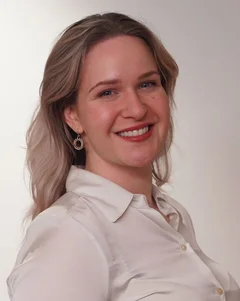
Dr. Kern is the CEO of LinkGevity, an AI-powered biotech company driving innovation in drug discovery for aging and resilience loss. With a distinguished background in Molecular Biology, Pharmacology, and Genetics, Carina is known for her pioneering work on aging mechanisms and lifespan extension. Her labs are based at the Babraham Research Campus, affiliated with the University of Cambridge. Her research has led to the development of a first-in-class necrosis inhibitor targeting cellular degeneration (Anti-Necrotic™). In partnership with the NHS, this novel therapeutic is poised to begin clinical trials, as a potential breakthrough treatment for aging. The Anti-Necrotic™ has been backed by numerous strategic Innovate UK and EU grants, The Francis Crick Institute and UK Space Agency. It was also selected as one of only 12 global innovations for the NASA-backed Space-Health program, recognizing its potential to mitigate accelerated aging in astronauts on long-duration space missions.
ROUNDTABLE 3: Closing the Gap Between AI-Generated Molecules and Real Decisions
What will this discussion cover?
• How scientists decide which AI-generated molecules are worth pursuing
• The current state of chemistry foundation models
• Challenges of working with low-data and noisy-assay environments
• Building trust in AI through uncertainty estimation, synthesizability and real-world validation
Generative models can now propose vast numbers of novel molecular structures, but proposing molecules is not the bottleneck. The hard part is deciding which molecules to make, and giving chemists a reason to trust an AI prediction. This roundtable examines what is required to close the gap between generated molecules and trusted, actionable design. We will explore where chemistry foundation models stand today, and how they perform in the low-data, noisy-assay settings that define most real drug discovery programmes. Running through all of it is the question of trust: how uncertainty, synthesisability and other factors determine whether AI-designed molecules ever leave the screen, and what the next decade must deliver to impact real-world programmes.
Facilitated by Andrea Dimitracopoulos
Andrea Dimitracopoulos is a scientist and entrepreneur working at the intersection of life sciences and artificial intelligence, with a focus on AI for drug discovery. He holds a PhD from UCL, where he specialised in modelling complex biological systems. Andrea co-founded deepmirror to bridge the gap between advanced AI and its practical use in scientific research. He is particularly interested in how people and AI can work synergistically to reduce the time, cost and experimental burden of drug discovery, and ultimately to bring about positive change in human health.
Roundtable 4: From Automation to AI-Native Experimentation: Building Smarter Growth Loops
In this interactive roundtable, we'll explore how organisations can make the most of their automation investments, what it means to adopt an AI-native approach to experimentation, and how to begin building closed-loop systems that learn and improve over time. We'll also tackle the practical question many teams face: can we afford automation, or can we afford not to? Join fellow innovators to share challenges, insights, and real-world strategies for scaling impact with automation and AI.
Hosted by: Camillo Moschner
Camillo Moschner heads lab automation at Cambridge-based biotech Constructive Bio and is a core developer of PyLabRobot, the open-source automation platform. Through his own consultancy, BioCam Technologies, he advises on lab technology and automation, with a focus on getting the most out of PyLabRobot deployments. With a PhD in Engineering from Cambridge, a molecular biology background from UCL, and over a decade at the bench, he builds automation that delivers real insight, products, and partnerships - bridging biology and engineering at scale.
Roundtable 5: Repurpose, Restratify, Reengineer: The Options for the Second Chance
Why a large share of shelved and failed assets retain real therapeutic value, and the three routes back:
- Repurposing to new indications,
- Restratifying to responsive patient subgroups, and
- Reengineering the molecule itself
How teams decide which route fits a given asset, and what evidence justifies reviving a programme others have written off. Where AI changes the calculus, from mechanism and biomarker discovery to predicting and mitigating the liabilities that killed the asset the first time. The commercial and IP realities of building on prior failure, and why the industry systematically underinvests here. Drug discovery is dominated by the search for new molecules, yet a vast inventory of compounds already carries human safety and pharmacology data and sits unused after a single failed readout. Failure is rarely total. A molecule wrong for one indication may be right for another, wrong for a broad population may work in a defined subgroup, and wrong in its current form may be salvageable through chemistry. This roundtable examines turnaround as a discipline: when a second chance is rational rather than sentimental, how computational and experimental evidence combine to justify it, and why an industry fixated on novelty leaves so much recoverable value on the shelf.
Hosted by: Jordan Lane
Dr Jordan Lane is a biochemist and geneticist dedicated to transforming drug discovery through the intelligent integration of artificial intelligence and bioscience. He combines deep scientific insight with advanced computational approaches to enhance drug safety, efficacy, and translational success. As Co-Founder and Chief Scientific Officer of Ignota Labs, Dr Lane leads the company’s mission to rescue, repair, and reimagine drug assets that have been halted due to safety concerns. By uniting mechanistic toxicology, multi-omics data, and explainable AI, Ignota Labs is building a new model for drug discovery that turns failed assets into future medicines.

London Longevity Network is an innovation platform that connects builders, scientists, investors, and innovators, all united by a shared commitment to advancing human healthy lifespan. Breakthroughs in longevity biotech are happening across labs, clinics, and startups, but progress is often siloed. We exist to change that.
Our big-picture goal is to create a global hub for longevity innovation, where bold ideas, world-class talent, and forward-thinking capital come together to make longer and healthier lives possible for everyone.

Reflections on the evening.
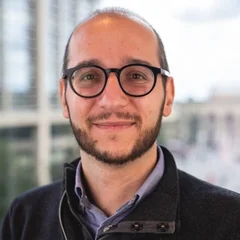
Andrea Dimitracopoulos is a scientist and entrepreneur working at the intersection of life sciences and artificial intelligence, with a focus on AI for drug discovery. He holds a PhD from UCL, where he specialised in modelling complex biological systems. Andrea co-founded deepmirror to bridge the gap between advanced AI and its practical use in scientific research. He is particularly interested in how people and AI can work synergistically to reduce the time, cost and experimental burden of drug discovery, and ultimately to bring about positive change in human health.


Dr. Kern is the CEO of LinkGevity, an AI-powered biotech company driving innovation in drug discovery for aging and resilience loss. With a distinguished background in Molecular Biology, Pharmacology, and Genetics, Carina is known for her pioneering work on aging mechanisms and lifespan extension. Her labs are based at the Babraham Research Campus, affiliated with the University of Cambridge. Her research has led to the development of a first-in-class necrosis inhibitor targeting cellular degeneration (Anti-Necrotic™). In partnership with the NHS, this novel therapeutic is poised to begin clinical trials, as a potential breakthrough treatment for aging. The Anti-Necrotic™ has been backed by numerous strategic Innovate UK and EU grants, The Francis Crick Institute and UK Space Agency. It was also selected as one of only 12 global innovations for the NASA-backed Space-Health program, recognizing its potential to mitigate accelerated aging in astronauts on long-duration space missions.
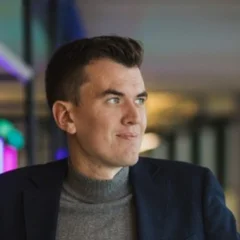
Dr Jordan Lane is Chief Scientific Officer and Co-Founder of Ignota Labs, a Cambridge-based biotech applying AI to rescue promising drugs abandoned for safety reasons and return them to clinical development. He has advanced five assets to clinical development across oncology, autoimmune disease, and blood cancers. Before Ignota Labs he developed oncology assets at AstraZeneca and led AI-driven drug discovery at LabGenius and BenevolentAI. He holds a PhD from the University of Nottingham, has contributed to more than 15 publications, is an Industry and Enterprise Fellow at Clare Hall, University of Cambridge and a member of the UK Young Academy.
Throughout his career, Dr Lane has been guided by a conviction that innovation in medicine must begin with understanding: of biology, of data, and of the reasons drugs fail, to ultimately deliver safer and more effective therapeutics to patients worldwide.
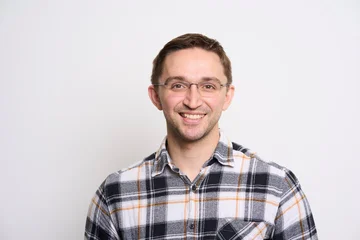
Camillo Moschner heads lab automation at Cambridge-based biotech Constructive Bio and is a core developer of PyLabRobot, the open-source automation platform. Through his own consultancy, BioCam Technologies, he advises on lab technology and automation, with a focus on getting the most out of PyLabRobot deployments. With a PhD in Engineering from Cambridge, a molecular biology background from UCL, and over a decade at the bench, he builds automation that delivers real insight, products, and partnerships - bridging biology and engineering at scale.
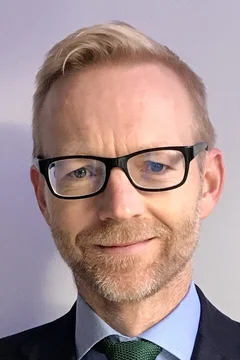
Dr Jack Scannell is best known for his work on the scientific, economic, and regulatory influences on R&D productivity in the biotech and pharmaceutical industries ("Eroom's Law", "Predictive Validity"). He is CEO of Etheros Pharmaceuticals and Venture Director at Hiro Capital. He led Discovery Biology at e-Therapeutics PLC, an Oxford-based tech-bio firm. He has experience in drug and biotech investment at UBS and at Sanford Bernstein where he ran the European Healthcare teams. He has a Ph.D. in physiology from Oxford University and a degree in medical sciences from Cambridge University.

📍 1 Triton Square, London NW1 3BF
AI is changing biotech forever. Frontier Biotech 2.0: Five Tables will map AI in drug discovery and development across five stages; targets, molecules, labs, trials, patients. Each table is chaired by a practitioner who has deep knowledge and expertise in this area.
The format is designed for genuine exchange of insights, connections and bold ideas. We will close the night with a synthesis panel with all roundtable chairs to share learnings from their table. Six showcase startups across the stack run demos throughout, alongside an opening workshop and themed networking.
Join us to share and hear what the next 10 years in biotech might look like.
Powered by Advanced Research + Invention Agency
In partnership with London Longevity Network
London Longevity Network is an innovation platform that connects builders, scientists, investors, and innovators, all united by a shared commitment to advancing human healthy lifespan. Breakthroughs in longevity biotech are happening across labs, clinics, and startups, but progress is often siloed. We exist to change that.
Our big-picture goal is to create a global hub for longevity innovation, where bold ideas, world-class talent, and forward-thinking capital come together to make longer and healthier lives possible for everyone.
Our Thursday Gatherings are for you to make serendipitous connections and make things happen!
There will be meaningful networking opportunities throughout the night, accompanied by a selection of refreshments and activities:
Fun Zone
Get to know your fellow change-makers in a fun, interactive, and exciting way!
Take a quick break from changing the world and recharge by pinning your hometown on our giant map.
Conversation Corner
Looking to connect beyond the name tags?
Drop into our relaxed Conversation Corner, a cosy space where founders, ecosystem builders, and global thinkers come together to share stories, swap lessons, and innovate. Grab a drink, pull up a chair, and jump into the discussion.
We're excited to welcome a brilliant lineup of biotech startups:
- Photon Fusion - builds decision intelligence frameworks for biotech, for the times when science, IP, and the market are all moving at different speeds.
- Kiin Bio - redefining how drug discovery should work and how information flows.
- Pearbio - delivering functional precision medicine tests and therapeutics to patients what hard-to-treat cancers.
- Syndex Bio - mcPCR is our novel and proprietary platform technology that preserves DNA methylation during DNA amplification.
- Portal Biosystems
- Engivent - building infrastructure for an autonomous biology lab.
- Health Return on Time Investment (HROTI):How to audit your daily schedule to prioritize the highest-yielding biological habits.
- Health Return on Financial Investment (HROFI): How to allocate your specific budget—whether large or small—to the interventions that offer the greatest cellular "dividends."
Introduction from Venture Café London.
We will break the event up into five concurrent roundtables, each chaired by a domain practitioner with one driving question. The five chairs will close the night on the main stage with a synthesis of what their tables figured out.
ROUNDTABLE 1: Irrelevant, Biased or False? When Beautiful AI Meets Ugly Biological Data
What will this discussion cover?
• How poor-quality biological data and disease models can undermine AI-driven drug discovery• Why "Predictive Validity" matters more than the volume of data generated• Common pitfalls in model development and candidate selection• Practical approaches for improving decision-making in R&D
There is an ugly productivity paradox in the history of drug R&D. The brute force efficiency of scientific tools—computational, molecular and cellular—has improved spectacularly over several decades. DNA sequencing became 10 billion times cheaper between 1970 and 2010, while the number of protein structures deposited in the PDB grew more than 1,000-fold between 1975 and 2025.Yet the drug industry spends 100 times more, in inflation-adjusted terms, per new drug discovered today than it did in 1950. Decision theory applied to the R&D process helps explain why. The "Predictive Validity" of a model system, the degree to which it ranks therapeutic candidates in a way that correlates with their true utility in patients, is often far more important than the number of candidates designed or tested.Quality beats quantity. This roundtable will discuss lousy biological data, terrible disease models, Predictive Validity pitfalls, and how to avoid them.
Facilitated by Dr Jack Scannell
Dr Jack Scannell is best known for his work on the scientific, economic, and regulatory influences on R&D productivity in the biotech and pharmaceutical industries ("Eroom's Law", "Predictive Validity"). He is CEO of Etheros Pharmaceuticals and Venture Director at Hiro Capital. He led Discovery Biology at e-Therapeutics PLC, an Oxford-based tech-bio firm. He has experience in drug and biotech investment at UBS and at Sanford Bernstein where he ran the European Healthcare teams. He has a Ph.D. in physiology from Oxford University and a degree in medical sciences from Cambridge University.
ROUNDTABLE 2: AI and Computational Approaches vs Wet Lab: Finding the Right Balance in Drug Discovery
What will this discussion cover?
• Where AI and computational approaches create the most value in drug discovery
• The continued role of experimental biology and wet-lab validation
• Building effective feedback loops between prediction and experimentation
• How the balance between AI and laboratory research may evolve over the next decade
Computational methods and AI are transforming how we identify targets, design molecules and prioritise experiments, yet drug development remains fundamentally grounded in biology and experimental validation. This roundtable will explore the strengths and limitations of both computational and wet-lab approaches, where each creates the most value, and how organisations can build effective feedback loops between prediction and experimentation. We will discuss what the optimal balance looks like today, and how it may evolve over the next decade.
Facilitated by Carina Kern
Dr. Kern is the CEO of LinkGevity, an AI-powered biotech company driving innovation in drug discovery for aging and resilience loss. With a distinguished background in Molecular Biology, Pharmacology, and Genetics, Carina is known for her pioneering work on aging mechanisms and lifespan extension. Her labs are based at the Babraham Research Campus, affiliated with the University of Cambridge. Her research has led to the development of a first-in-class necrosis inhibitor targeting cellular degeneration (Anti-Necrotic™). In partnership with the NHS, this novel therapeutic is poised to begin clinical trials, as a potential breakthrough treatment for aging. The Anti-Necrotic™ has been backed by numerous strategic Innovate UK and EU grants, The Francis Crick Institute and UK Space Agency. It was also selected as one of only 12 global innovations for the NASA-backed Space-Health program, recognizing its potential to mitigate accelerated aging in astronauts on long-duration space missions.
ROUNDTABLE 3: Closing the Gap Between AI-Generated Molecules and Real Decisions
What will this discussion cover?
• How scientists decide which AI-generated molecules are worth pursuing
• The current state of chemistry foundation models
• Challenges of working with low-data and noisy-assay environments
• Building trust in AI through uncertainty estimation, synthesizability and real-world validation
Generative models can now propose vast numbers of novel molecular structures, but proposing molecules is not the bottleneck. The hard part is deciding which molecules to make, and giving chemists a reason to trust an AI prediction. This roundtable examines what is required to close the gap between generated molecules and trusted, actionable design. We will explore where chemistry foundation models stand today, and how they perform in the low-data, noisy-assay settings that define most real drug discovery programmes. Running through all of it is the question of trust: how uncertainty, synthesisability and other factors determine whether AI-designed molecules ever leave the screen, and what the next decade must deliver to impact real-world programmes.
Facilitated by Andrea Dimitracopoulos
Andrea Dimitracopoulos is a scientist and entrepreneur working at the intersection of life sciences and artificial intelligence, with a focus on AI for drug discovery. He holds a PhD from UCL, where he specialised in modelling complex biological systems. Andrea co-founded deepmirror to bridge the gap between advanced AI and its practical use in scientific research. He is particularly interested in how people and AI can work synergistically to reduce the time, cost and experimental burden of drug discovery, and ultimately to bring about positive change in human health.
Roundtable 4: From Automation to AI-Native Experimentation: Building Smarter Growth Loops
In this interactive roundtable, we'll explore how organisations can make the most of their automation investments, what it means to adopt an AI-native approach to experimentation, and how to begin building closed-loop systems that learn and improve over time. We'll also tackle the practical question many teams face: can we afford automation, or can we afford not to? Join fellow innovators to share challenges, insights, and real-world strategies for scaling impact with automation and AI.
Hosted by: Camillo Moschner
Camillo Moschner heads lab automation at Cambridge-based biotech Constructive Bio and is a core developer of PyLabRobot, the open-source automation platform. Through his own consultancy, BioCam Technologies, he advises on lab technology and automation, with a focus on getting the most out of PyLabRobot deployments. With a PhD in Engineering from Cambridge, a molecular biology background from UCL, and over a decade at the bench, he builds automation that delivers real insight, products, and partnerships - bridging biology and engineering at scale.
Roundtable 5: Repurpose, Restratify, Reengineer: The Options for the Second Chance
Why a large share of shelved and failed assets retain real therapeutic value, and the three routes back:
- Repurposing to new indications,
- Restratifying to responsive patient subgroups, and
- Reengineering the molecule itself
How teams decide which route fits a given asset, and what evidence justifies reviving a programme others have written off. Where AI changes the calculus, from mechanism and biomarker discovery to predicting and mitigating the liabilities that killed the asset the first time. The commercial and IP realities of building on prior failure, and why the industry systematically underinvests here. Drug discovery is dominated by the search for new molecules, yet a vast inventory of compounds already carries human safety and pharmacology data and sits unused after a single failed readout. Failure is rarely total. A molecule wrong for one indication may be right for another, wrong for a broad population may work in a defined subgroup, and wrong in its current form may be salvageable through chemistry. This roundtable examines turnaround as a discipline: when a second chance is rational rather than sentimental, how computational and experimental evidence combine to justify it, and why an industry fixated on novelty leaves so much recoverable value on the shelf.
Hosted by: Jordan Lane
Dr Jordan Lane is a biochemist and geneticist dedicated to transforming drug discovery through the intelligent integration of artificial intelligence and bioscience. He combines deep scientific insight with advanced computational approaches to enhance drug safety, efficacy, and translational success. As Co-Founder and Chief Scientific Officer of Ignota Labs, Dr Lane leads the company’s mission to rescue, repair, and reimagine drug assets that have been halted due to safety concerns. By uniting mechanistic toxicology, multi-omics data, and explainable AI, Ignota Labs is building a new model for drug discovery that turns failed assets into future medicines.
London Longevity Network is an innovation platform that connects builders, scientists, investors, and innovators, all united by a shared commitment to advancing human healthy lifespan. Breakthroughs in longevity biotech are happening across labs, clinics, and startups, but progress is often siloed. We exist to change that.
Our big-picture goal is to create a global hub for longevity innovation, where bold ideas, world-class talent, and forward-thinking capital come together to make longer and healthier lives possible for everyone.
Reflections on the evening.
Andrea Dimitracopoulos is a scientist and entrepreneur working at the intersection of life sciences and artificial intelligence, with a focus on AI for drug discovery. He holds a PhD from UCL, where he specialised in modelling complex biological systems. Andrea co-founded deepmirror to bridge the gap between advanced AI and its practical use in scientific research. He is particularly interested in how people and AI can work synergistically to reduce the time, cost and experimental burden of drug discovery, and ultimately to bring about positive change in human health.
Dr. Kern is the CEO of LinkGevity, an AI-powered biotech company driving innovation in drug discovery for aging and resilience loss. With a distinguished background in Molecular Biology, Pharmacology, and Genetics, Carina is known for her pioneering work on aging mechanisms and lifespan extension. Her labs are based at the Babraham Research Campus, affiliated with the University of Cambridge. Her research has led to the development of a first-in-class necrosis inhibitor targeting cellular degeneration (Anti-Necrotic™). In partnership with the NHS, this novel therapeutic is poised to begin clinical trials, as a potential breakthrough treatment for aging. The Anti-Necrotic™ has been backed by numerous strategic Innovate UK and EU grants, The Francis Crick Institute and UK Space Agency. It was also selected as one of only 12 global innovations for the NASA-backed Space-Health program, recognizing its potential to mitigate accelerated aging in astronauts on long-duration space missions.
Dr Jordan Lane is Chief Scientific Officer and Co-Founder of Ignota Labs, a Cambridge-based biotech applying AI to rescue promising drugs abandoned for safety reasons and return them to clinical development. He has advanced five assets to clinical development across oncology, autoimmune disease, and blood cancers. Before Ignota Labs he developed oncology assets at AstraZeneca and led AI-driven drug discovery at LabGenius and BenevolentAI. He holds a PhD from the University of Nottingham, has contributed to more than 15 publications, is an Industry and Enterprise Fellow at Clare Hall, University of Cambridge and a member of the UK Young Academy.
Throughout his career, Dr Lane has been guided by a conviction that innovation in medicine must begin with understanding: of biology, of data, and of the reasons drugs fail, to ultimately deliver safer and more effective therapeutics to patients worldwide.
Camillo Moschner heads lab automation at Cambridge-based biotech Constructive Bio and is a core developer of PyLabRobot, the open-source automation platform. Through his own consultancy, BioCam Technologies, he advises on lab technology and automation, with a focus on getting the most out of PyLabRobot deployments. With a PhD in Engineering from Cambridge, a molecular biology background from UCL, and over a decade at the bench, he builds automation that delivers real insight, products, and partnerships - bridging biology and engineering at scale.
Dr Jack Scannell is best known for his work on the scientific, economic, and regulatory influences on R&D productivity in the biotech and pharmaceutical industries ("Eroom's Law", "Predictive Validity"). He is CEO of Etheros Pharmaceuticals and Venture Director at Hiro Capital. He led Discovery Biology at e-Therapeutics PLC, an Oxford-based tech-bio firm. He has experience in drug and biotech investment at UBS and at Sanford Bernstein where he ran the European Healthcare teams. He has a Ph.D. in physiology from Oxford University and a degree in medical sciences from Cambridge University.